Portable battery storage units have become essential for our on-the-go lifestyles. They power everything from smartphones to laptops. However, many users overlook the importance of maintenance. Knowing how to maintain portable battery storage units significantly extends their lifespan and enhances performance.
Over time, these units can degrade if not properly cared for. This could lead to reduced charging efficiency or even safety hazards. Regular checks can prevent such issues. Simple steps, like monitoring temperature and avoiding overcharging, should be part of your routine. Users should be aware that neglecting maintenance could result in costly replacements.
Your portable battery storage unit serves you best when treated well. Implementing a few strategies can make a big difference. Small habits lead to improved reliability. Taking the time to learn about maintenance is worthwhile. Remember, a well-maintained unit not only performs better but also ensures your devices stay powered and safe.
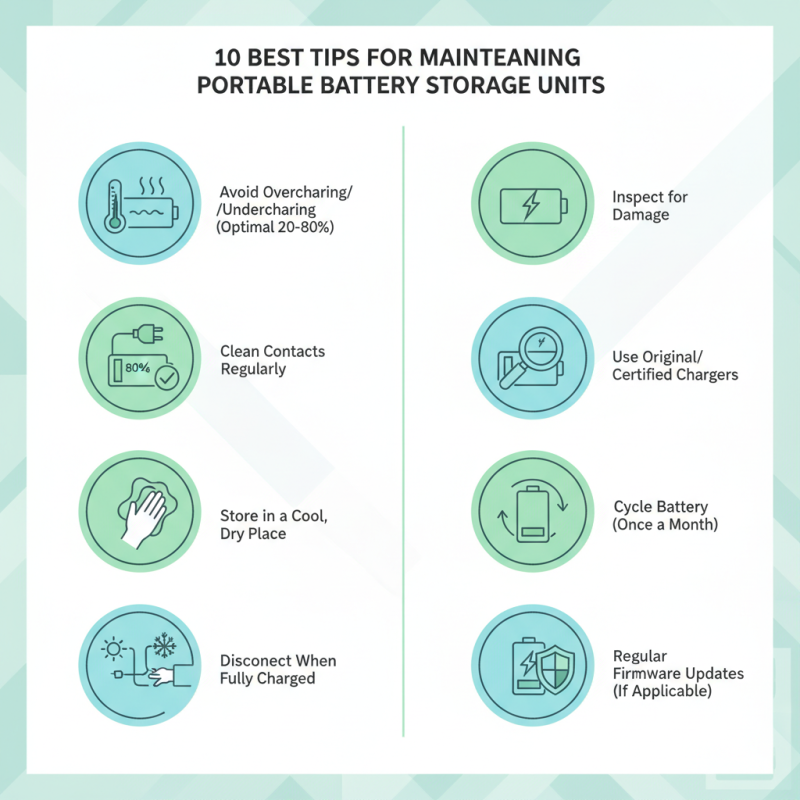
Portable battery storage units have become essential tools for both everyday users and professionals. They help ensure that we have power wherever we go, which is crucial in our tech-driven lives. These units are not just about convenience; they also support sustainability by enabling the use of renewable energy sources. Understanding their importance is the key to using them effectively.
When using portable battery storage, proper maintenance is critical. Regularly check the battery's charge cycles. Lithium batteries can lose capacity if not properly charged. It’s also wise to keep the unit in a cool, dry place. High temperatures can degrade battery health over time. Often, people overlook this.
Another tip to consider is to avoid letting the battery fully discharge. Doing so can shorten its lifespan. Instead, aim to recharge it when it hits around 20%. This small effort can make a significant difference. Seek professional advice if you notice unusual performance. Neglecting early signs can lead to bigger issues later. A little reflection on these practices can enhance the longevity and reliability of your battery storage unit.
Regular maintenance checks are crucial for the longevity and performance of portable battery storage units.
By routinely inspecting these units, users can identify potential issues before they escalate. One important tip is to check the battery terminals for corrosion.
A small amount of corrosion can hinder performance. Keeping them clean will enhance connectivity and maintain efficiency.
Additionally, monitoring the battery's charge cycles is essential.
Overcharging or deep discharging can shorten a battery's lifespan. It's useful to track how often you charge your unit.
Aim for a balanced charging schedule, avoiding extremes whenever possible. This small adjustment can yield significant benefits over time.
Finally, physical condition matters.
Store your battery in a cool, dry place away from direct sunlight. High temperatures can reduce battery efficiency and lifespan.
Even a dent or crack in the casing can lead to serious issues. Regular visual inspections can prevent future problems.
Remember, the goal is to optimize your battery for reliable performance.
When it comes to maintaining portable battery storage units, safe charging practices play a vital role. According to a study by the National Renewable Energy Laboratory, incorrect charging can reduce battery life by up to 30%. Therefore, charge your battery in a stable temperature environment, ideally between 20°C and 25°C. Extreme heat or cold can lead to irreversible damage.
Regularly check the charging cables. A frayed wire can cause short circuits. Over time, these issues might harm both the battery and your devices. Using compatible chargers is essential. Mismatched voltage can lead to overheating. The Battery University reports that following the manufacturer's instructions improves charging efficiency by as much as 15%. Monitor the battery levels; don’t let it drop below 20% frequently.
Slow charging is often better than fast charging. High current can stress your battery. Limiting prolonged charging sessions is crucial. Do not leave batteries plugged in overnight. This habit can negatively affect the battery over time. While it’s tempting to keep devices fully charged, it may lead to lithium plating, reducing capacity. Understanding these details will help you optimize battery life and performance.
When handling portable battery storage units, proper storage and handling techniques are crucial. According to industry reports, around 30% of battery failures are attributed to improper storage conditions. Storing batteries in extreme temperatures can lead to performance degradation or even leakage. Ideally, maintain a temperature between 20°C and 25°C. Avoid placing units in direct sunlight or near heat sources.
Proper physical handling is also essential. Ensure units are kept in a dry environment to prevent moisture damage. Use anti-static materials during transportation. Industry standards recommend using protective cases to shield batteries from physical impacts. Always check for visible signs of wear before use. Handling safety is key, as an improperly stored battery could cause accidents.
Regular inspection and monitoring are advisable every three months. Keep track of the charge cycle, as exceeding the recommended limits can shorten battery life. Follow these guidelines meticulously to enhance the longevity of portable battery storage units. Remember, awareness of these potential pitfalls allows for better decision-making in battery maintenance.
Portable battery storage units play a crucial role in our daily lives, but they wear out over time. It's essential to recognize the signs of wear and know when to replace your unit. Common indicators include significant capacity loss, unusual heat during use, and failure to charge. According to a 2021 energy report, around 30% of portable battery users experienced a noticeable drop in performance within 2-3 years of regular use.
To maintain your battery’s health, here are some practical tips. First, avoid exposing the unit to extreme temperatures. High heat or freezing conditions can damage battery cells. Secondly, regularly check for any physical damage, like cracks or swelling. These can indicate internal issues that may lead to failure. Additionally, keep your battery clean by removing dirt and debris. This ensures optimal performance and increases lifespan.
Stay vigilant about your battery's lifespan. If you notice that your unit struggles to hold a charge or if it frequently turns off unexpectedly, consider replacing it. Continuous use in a declining state can lead to more severe issues, including safety hazards. Regular monitoring and proactive maintenance can ensure reliability and safety in powering your devices.
: Maintain temperatures between 20°C and 25°C to avoid performance issues and leakage.
Regular inspections are recommended every three months for optimal performance.
Swelling or cracks indicate potential internal damage. Replace your battery to avoid safety risks.
Yes, high heat or freezing conditions can damage battery cells and degrade function.
Use anti-static materials and protective cases to prevent physical damage during transport.
Keep it clean, avoid extreme temperatures, and monitor its charge cycle regularly.
Look for significant capacity loss, unusual heat, or frequent charging issues.
Improper storage can contribute to around 30% of battery failures due to degradation.
Yes, checking for wear can prevent accidents and ensure safer usage.
Using a declining battery can lead to severe issues and safety hazards.
Maintaining portable battery storage units is crucial for ensuring their longevity and efficiency. To effectively manage these devices, one should begin by conducting regular maintenance checks, which can optimize performance and identify any potential issues early on. Safe charging practices are equally important; using the right charger and avoiding overcharging can significantly prolong battery life.
Furthermore, proper storage and handling techniques are essential to prevent physical damage. It's also important to be aware of signs of wear and know when to replace your portable battery storage unit. By following these guidelines on how to maintain portable battery storage units, users can ensure they remain reliable and functional for all their energy storage needs.

HK Charger