China’s electric vehicle market is expanding quickly, creating new pressure on charging infrastructure. Drivers expect fast, reliable charging at workplaces, homes, highways, and commercial sites. Yet, grid capacity is not unlimited. A large charging hub can draw substantial power within minutes, especially during evening demand peaks.
How EV charging can be combined with energy storage is becoming a practical question for planners and operators. Battery energy storage systems can charge during lower-cost periods, then support vehicles when demand rises. This approach may reduce peak grid consumption, improve charging availability, and make better use of solar power. A typical site might store midday solar energy and release it when several vehicles arrive after work.
The best solution depends on more than battery size. Site load profiles, charger power, local grid conditions, temperature, fire protection, and maintenance access all require careful evaluation. Experienced suppliers should provide clear performance data, realistic warranty terms, monitoring systems, and safety documentation. Independent testing and qualified installation also matter.
There is no universal “best” system.
China offers a broad range of charging and storage technologies, but product quality and service capability can vary. Buyers should compare lifecycle costs, not only the initial quotation. They should also examine degradation, software compatibility, replacement planning, and after-sales support. Some projects may discover that a smaller battery, combined with smart charging, performs better than an oversized system. That possibility deserves attention. Reliable deployment comes from measured design, transparent evidence, and continuous operational review.
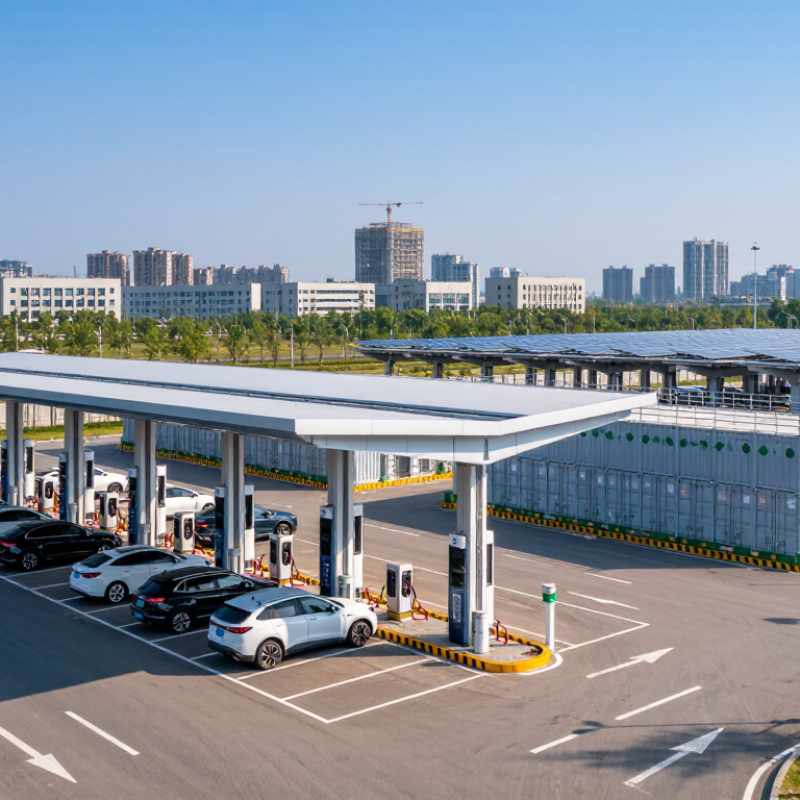
China’s EV charging and energy storage solutions connect vehicles, chargers, batteries, and digital energy management. AC chargers suit homes and workplaces. High-power DC chargers serve highways, taxi depots, and urban charging hubs. Battery storage reduces grid pressure during busy evening periods. It can also store solar electricity for later charging.
The scale is substantial. The International Energy Agency reported that China held more than half of the world’s public charging points in 2023. China’s National Energy Administration reported about 12.8 million charging facilities by the end of 2024. New energy storage capacity also exceeded 30 gigawatts by the end of 2023, according to government data. These figures show strong infrastructure growth. They do not guarantee equal service everywhere. Rural access, peak-demand pricing, and battery replacement costs still require careful planning. That part is often underestimated.
Tips: Match charger power with local grid capacity. Add storage where demand charges are high. Use an energy management system to schedule charging during cheaper hours. Check safety certifications, thermal controls, maintenance records, and emergency procedures before deployment. Leave space for future expansion. A smaller, well-monitored system may outperform a larger system with poor utilization. Forecasts can be wrong, especially when vehicle use changes quickly.
An integrated EV charging and energy storage system links chargers, batteries, solar generation, and the local grid through an energy management system. During sunny hours, solar power can charge vehicles directly. Extra electricity charges the battery instead of returning to the grid. When several cars arrive, the controller balances available power between chargers. This prevents one vehicle from consuming the entire site capacity. At night or during peak tariffs, stored energy supports charging. Grid power remains available when storage becomes insufficient.
A bidirectional inverter controls energy movement between the battery, chargers, solar panels, and grid. Sensors measure voltage, current, battery temperature, and charging demand every few seconds. Software then adjusts output automatically.
For example, a parking facility may limit each charger to 30 kilowatts while using storage during demand spikes. This can reduce expensive peak loads without delaying every driver. It is not magic. Conversion losses, battery aging, cloudy weather, and poor cable sizing still affect performance.
In practical installations, engineers should calculate daily traffic, parking duration, local tariffs, and available grid capacity before selecting equipment. Fire protection, ventilation, grounding, and electrical approvals also require careful review. A system that looks powerful on paper may perform poorly if its battery is undersized. Small errors matter. Real operating data should guide later adjustments, because charging patterns often differ from initial forecasts. Integrated controls can improve reliability, but regular inspections and transparent performance records remain essential.
Lithium-ion batteries remain the practical backbone of energy storage for EV charging. Their high power output can support several fast-charging sessions during grid peaks. The IEA’s Global EV Outlook 2024 reports that electric car sales approached 14 million in 2023. Charging demand is therefore becoming harder for local grids to absorb. Lithium iron phosphate cells offer strong thermal stability and long cycle life. They often suit depot charging and commercial sites. However, their larger footprint can complicate space-limited projects.
Flow batteries provide a different option for longer-duration storage. They separate energy capacity from power capacity, making expansion more flexible. Lazard’s Levelized Cost of Storage analysis shows that flow systems can become attractive for extended discharge periods. Their lower energy density remains a serious weakness. Sodium-ion technology may reduce dependence on certain critical minerals. Commercial performance data is still less mature than lithium-ion data. Treating it as a universal replacement would be premature.
Second-life EV batteries can support slower charging, solar shifting, and backup power. The IEA’s Batteries and Secure Energy Transitions report identifies stationary storage as a growing source of battery demand. Yet reused batteries bring uneven degradation, testing costs, and uncertain warranties. Thermal storage can also reduce cooling loads at charging stations, but it cannot directly replace electrical storage. Site measurements matter more than attractive specifications. A poorly sized system may waste capacity every night. Data is not destiny.
China Best EV Charging With Energy Storage Solutions?
The best Chinese EV charging solution begins with dependable daily performance, not a striking power rating. A site should support common vehicle standards, clear billing, and stable communication. In field evaluations, technicians check charging output during morning peaks, winter cold, and heavy rain. A charger that reaches its promised speed only in ideal weather is not enough. Small details matter. Cable handling, screen visibility, and emergency stopping should feel simple.
Energy storage adds value when electricity demand changes sharply. Batteries can store power during low-price periods and support chargers during busy hours. This may reduce demand charges and limit pressure on local grids. However, storage capacity must match traffic patterns. A small depot with ten evening vehicles needs a different design from a highway station serving vehicles continuously. Oversized batteries increase cost, maintenance, and space requirements. More capacity is not always better.
Safety and long-term service define professional solutions. Look for thermal monitoring, fire protection planning, controlled ventilation, and documented electrical testing. Software should provide fault alerts, usage records, and remote diagnostics without hiding important data. Local technicians, spare parts, and clear response times also matter. I would question any proposal promising zero downtime. Real equipment needs inspection. Performance can decline. A reliable supplier explains these limits, offers measurable warranties, and adjusts the system after observing actual charging behavior. That practical honesty is often more valuable than a glossy specification sheet.
| Evaluation Factor | Typical Technical Benchmark in China | What Defines a Strong Solution | Practical Value |
|---|---|---|---|
| Charging Power | AC charging commonly ranges from 3.7–22 kW; DC charging commonly ranges from 30–350 kW, depending on site capacity and vehicle compatibility. | Offers modular power options, dynamic power allocation, and compatibility with both passenger vehicles and commercial fleets. | Supports different charging scenarios without unnecessarily increasing installation and electricity costs. |
| Charging Standard Compatibility | China’s commonly used conductive charging interfaces are specified under GB/T 20234.2 for AC and GB/T 20234.3 for DC charging. | Uses compliant connectors, communication protocols, safety controls, and clearly documented compatibility requirements. | Reduces connection failures and improves interoperability with vehicles operating in the Chinese market. |
| Energy Storage Capacity | Commercial and fleet systems may range from tens of kilowatt-hours to several megawatt-hours, depending on load and operating hours. | Capacity is calculated from charging demand, peak-load limits, renewable generation, backup requirements, and expected daily cycles. | Prevents oversizing while providing enough energy for peak charging periods and demand management. |
| Battery Chemistry | Lithium iron phosphate batteries are widely used in stationary energy-storage applications because of their thermal stability and cycle-life characteristics. | Provides a documented cell specification, battery-management system, thermal monitoring, and a clear degradation warranty. | Improves safety, service-life predictability, and total cost control. |
| Round-Trip Efficiency | Well-designed battery-storage systems commonly achieve approximately 85–95% AC round-trip efficiency, depending on configuration and operating conditions. | Publishes efficiency test conditions and includes losses from the battery, power-conversion system, cooling, and auxiliary equipment. | Higher efficiency reduces energy waste and improves the economics of peak shaving and energy arbitrage. |
| Power Conversion System | Bidirectional PCS equipment allows the battery to charge from the grid and discharge to chargers or other loads. | Supports fast response, power-factor control, overload protection, and coordinated operation with charging equipment. | Enables peak shaving, load balancing, backup operation, and more stable site power management. |
| Load Management | Dynamic load management adjusts charger output according to transformer capacity, battery state of charge, and vehicle demand. | Uses real-time monitoring and prioritization rules for emergency vehicles, fleet schedules, and normal users. | Allows more vehicles to charge without exceeding the site’s grid-connection limit. |
| Safety Protection | Key protections include overcurrent, overvoltage, insulation monitoring, residual-current protection, surge protection, emergency shutdown, and thermal-event detection. | Combines electrical protection, battery monitoring, temperature sensing, smoke or gas detection where required, and physical separation. | Reduces operational risk and supports compliance with applicable Chinese electrical and fire-safety requirements. |
| Thermal Management | Air cooling may suit lower-power systems, while liquid cooling is generally used for higher-power charging or compact high-density storage. | Maintains stable operating temperatures and provides alarms, automatic derating, and controlled shutdown functions. | Improves charging consistency, battery life, and equipment reliability in hot or cold climates. |
| Renewable-Energy Integration | Solar photovoltaic systems can be coupled with storage and EV chargers through AC-coupled or DC-coupled architectures. | Coordinates solar generation, battery charging, vehicle charging, and grid import through an energy-management system. | Can increase renewable-energy self-consumption and reduce dependence on expensive peak-period electricity. |
| Communication and Software | Common functions include remote monitoring, charger status, transaction records, fault alarms, firmware management, and energy reports. | Provides open communication interfaces, role-based access, data export, cybersecurity controls, and integration with existing management platforms. | Makes multi-site operation, maintenance, billing, and performance analysis easier. |
| Reliability and Availability | A strong commercial system should provide continuous monitoring, fault isolation, replaceable modules, and documented uptime targets. | Uses modular power units, redundant communications where necessary, preventive maintenance, and locally available spare parts. | Shortens downtime and protects revenue in public, workplace, and fleet-charging applications. |
| Installation Requirements | Requirements may include transformer capacity, cable sizing, grounding, ventilation, fire separation, drainage, civil foundations, and local approvals. | Includes a complete site survey, single-line diagram, construction plan, commissioning procedure, and compliance documentation. | Reduces project delays, unexpected civil-work costs, and commissioning problems. |
| Operating Temperature and Environmental Rating | Outdoor equipment is commonly specified for a broad temperature range, while enclosure ratings such as IP54 or higher are selected according to site conditions. | Matches the enclosure, corrosion protection, cooling design, and altitude rating to the actual installation environment. | Improves long-term performance in coastal, dusty, humid, hot, or cold locations. |
| Lifecycle Cost | Total cost includes equipment, grid connection, civil works, electricity, demand charges, maintenance, software, battery replacement, and end-of-life handling. | Evaluates total cost of ownership instead of comparing only the initial purchase price. | Provides a more realistic basis for return-on-investment and project payback calculations. |
| After-Sales Support | Important service elements include commissioning, operator training, remote diagnostics, spare-parts availability, response-time commitments, and warranty terms. | Offers documented service procedures, clear warranty exclusions, software support, and trained maintenance personnel. | Protects system availability and reduces technical risk throughout the operating life of the project. |
Note: Technical ranges are typical market benchmarks and may vary according to vehicle compatibility, site design, local regulations, grid conditions, battery configuration, and operating strategy.
Choosing China’s best EV charging with energy storage solutions starts with the site, not the equipment. Businesses should map charging demand by hour, vehicle type, parking duration, and local electricity tariffs. A delivery depot needs rapid daytime charging. An office park may benefit from slower charging and evening storage discharge.
The International Energy Agency reported over four million public charging points worldwide at the end of 2023. China represented about 70% of that public charging stock. This scale creates opportunity, but it also exposes weak planning. Review transformer capacity, available rooftop area, fire-safety requirements, and expected vehicle growth before selecting battery capacity. Request measured load data, not only sales forecasts. Small details matter. A cable route can affect installation costs.
Businesses should compare total cost over ten years, including demand charges, maintenance, battery replacement, software, and electricity losses. Independent testing should verify round-trip efficiency, thermal management, protection systems, and performance in local temperatures. The National Renewable Energy Laboratory has emphasized that managed charging can reduce peak demand and improve grid flexibility, but results depend on control quality and user behavior. That warning deserves attention.
A system may look excellent on paper and still underperform during winter peaks. Pilot one charging block first. Track utilization, peak kilowatts, charging delays, and storage cycling for several months. Then adjust the design. The first forecast may be wrong. That is normal, but ignoring the evidence is not.
Representative engineering configurations for common commercial EV charging sites in China. Storage capacity and power should be finalized using measured load curves, transformer limits, electricity tariffs, and expected charging demand.
Fast-charging hubs generally require higher battery power to reduce grid impact, while workplaces and retail locations can use smaller systems with longer charging windows. A two-hour battery duration is commonly used as a practical starting point for peak shaving, solar self-consumption, and demand management.
They connect vehicles, chargers, batteries, solar power, and the local grid. An energy management system coordinates these parts. AC chargers fit homes and workplaces. High-power DC chargers suit highways, taxi depots, and urban hubs.
Solar power can charge vehicles directly during sunny hours. Extra electricity charges the battery. Stored energy supports charging during expensive evening periods. Grid power remains available when storage runs low. It is not magic.
Storage can reduce pressure on the local grid during busy periods. It can also lower peak-demand costs. For example, a site may limit each charger to 30 kilowatts. The battery then supports sudden vehicle arrivals.
Yes, solar electricity can charge vehicles during daylight. Surplus power can enter the battery for later use. Cloudy weather reduces generation. The system still needs grid support.
Match charger power with local grid capacity. Review vehicle traffic, parking time, and expected charging demand. A larger charger is not always better. Poor cable sizing can reduce performance.
Sensors measure voltage, current, battery temperature, and charging demand. The controller adjusts output among chargers, storage, solar panels, and the grid. These adjustments may happen every few seconds. Data matters.
Check safety certifications, thermal controls, maintenance records, and emergency procedures. Review fire protection, ventilation, grounding, and electrical approvals. Leave clear access around equipment. Small oversights can become expensive problems.
No. A smaller, well-monitored system may perform better with limited traffic. An oversized battery can suffer from poor utilization and unnecessary costs. Initial forecasts may be wrong. Real operating data should guide later changes.
China had more than half of the world’s public charging points in 2023. About 12.8 million charging facilities were reported by the end of 2024. New energy storage capacity exceeded 30 gigawatts by the end of 2023. Growth is substantial, but service remains uneven.
China’s EV charging and energy storage solutions combine charging infrastructure, renewable power, batteries, and intelligent energy management to deliver reliable and cost-effective electricity for electric vehicles. How EV charging can be combined with energy storage is central to this approach: stored energy can be charged during low-demand periods or generated from renewable sources, then released when vehicle demand rises. This helps reduce peak electricity costs, improve grid stability, and support charging in locations with limited grid capacity.
Integrated systems may use lithium-ion batteries, flow batteries, or other suitable storage technologies, depending on safety, lifespan, capacity, and budget requirements. The best Chinese EV charging solutions are defined by charging speed, energy efficiency, system compatibility, monitoring capabilities, scalability, and compliance with applicable standards. Businesses should assess traffic patterns, available power, installation conditions, future expansion plans, and total operating costs before deployment. A phased implementation, supported by intelligent controls and regular maintenance, can help create a dependable and sustainable charging network.

HK Charger