As the world shifts towards renewable energy, understanding energy storage systems becomes vital. Two prominent technologies are lithium-ion and flow batteries. They serve the same purpose but operate differently.
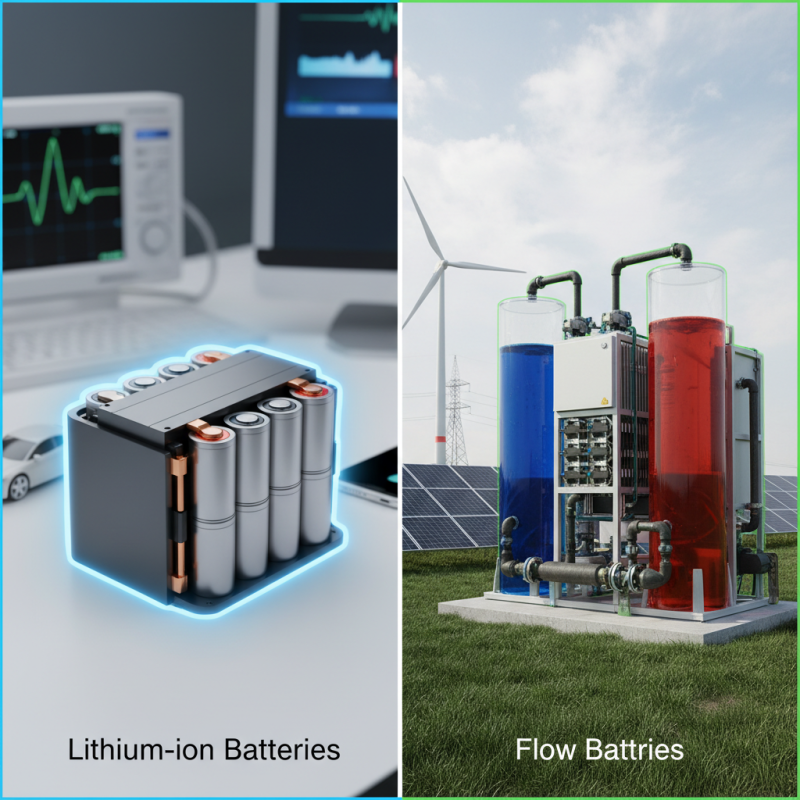
How lithium-ion and flow batteries differ lies in their design and application. Lithium-ion batteries store energy chemically in solid-state cells. This allows for compact, lightweight designs. They are widely used in electronics and electric vehicles. However, they have limitations regarding lifespan and thermal stability.
On the other hand, flow batteries utilize liquid electrolytes that circulate through a system. This design enables greater scalability and longevity. While they may not be as efficient in smaller applications, their performance in large-scale systems is noteworthy. Recognizing these differences can guide choices in energy storage solutions. It’s essential to evaluate the specific needs to select the appropriate battery technology.
Understanding Lithium-ion Batteries: Principles and Applications
Lithium-ion batteries play a vital role in modern technology. They power smartphones, laptops, and electric vehicles. Their widespread use stems from their high energy density and rechargeability. A lithium-ion battery comprises an anode, cathode, and electrolyte. The movement of lithium ions between these components generates electricity.
The applications of lithium-ion batteries are varied. In renewable energy systems, they store energy generated from solar panels or wind turbines. This storage capacity helps balance energy supply and demand. Moreover, they enhance the performance of electric vehicles, making them longer-lasting and more efficient. However, challenges remain, including concerns about recycling and raw material sourcing.
Understanding the principles behind lithium-ion technology opens doors to innovation. The industry is evolving, aiming for more sustainable alternatives. While lithium-ion batteries offer many benefits, their environmental impact cannot be ignored. A thoughtful approach is necessary to balance advancements with responsible practices. A deeper understanding encourages critical thinking about future developments.
Exploring Flow Batteries: Mechanisms and Benefits
Flow batteries represent an innovative advancement in energy storage technology. Their operation relies on two electrolyte solutions that circulate in separate tanks. When charged, these solutions undergo a chemical reaction that converts electrical energy into chemical potential energy. This mechanism allows for scalability; larger storage systems can be designed simply by increasing tank size. According to a report by the International Renewable Energy Agency (IRENA), flow batteries can achieve cycle times exceeding 10,000 cycles, significantly outperforming conventional batteries.
Benefits of flow batteries include longer life spans and enhanced safety. Unlike lithium-ion batteries, flow batteries do not catch fire easily. This feature makes them particularly appealing for large-scale applications such as renewable energy storage. Data from the U.S. Department of Energy indicates that flow batteries can deliver around 200 kWh of energy for every 1 kW of power output, making them efficient for long-duration applications. Additionally, since the energy and power are stored separately, these batteries can sustain energy delivery for extended periods without degrading performance.
Challenges remain in the widespread adoption of flow batteries. Currently, the initial costs can be high, often deterring investors. Research indicates a need for improvements in efficiency and materials to drive down prices. Moreover, public awareness around flow battery technology is limited, which may slow down broader acceptance in the market. As the industry evolves, addressing these issues will be crucial for maximizing the potential of flow batteries in future energy systems.
Key Characteristics of Lithium-ion vs. Flow Batteries
When distinguishing between lithium-ion and flow batteries, key characteristics play a crucial role.
Lithium-ion batteries are compact, lightweight, and have a high energy density.
According to the International Energy Agency (IEA), they can achieve energy densities of up to 250 Wh/kg.
This makes them ideal for applications like consumer electronics and electric vehicles.
In contrast, flow batteries provide scalability and longer discharge times.
They often utilize liquid electrolytes stored in external tanks. This design allows for larger energy storage capacities and flexible usage.
A recent report from Bloomberg New Energy Finance suggests that flow batteries can provide continuous power for over 8 hours at a time.
However, their lower energy density, often less than 40 Wh/kg, limits their use in mobile applications.
Cost is another critical factor to consider. Although lithium-ion batteries have become more affordable,
their price per kWh still hovers around $150, which can be steep for large-scale storage projects.
Flow batteries, while traditionally more expensive, are seeing price reductions due to advances in technology.
Industry forecasts indicate that prices for flow batteries may drop to around $100 per kWh by 2030.
Each technology has unique strengths and weaknesses that industries must navigate to find the right fit for their energy needs.
Comparative Analysis: Performance, Cost, and Lifespan
When comparing lithium-ion and flow batteries, performance varies significantly. Lithium-ion batteries are known for high energy density. They deliver quick bursts of energy, making them suitable for applications like electric vehicles. However, they can degrade over time, particularly with frequent fast charging. It is essential to consider the temperature range as well. Extreme heat can reduce their lifespan.
On the other hand, flow batteries exhibit a different performance profile. They excel in large-scale energy storage, such as renewable energy integration. The gradual discharge of energy supports extensive applications. Flow batteries also have longer lifespans due to their modular design. However, they tend to have lower energy density than their lithium-ion counterparts. This can limit their use in space-constrained environments.
Cost is another critical factor. Initial investments in lithium-ion technology are often lower. However, the replacement costs can add up over time. Flow batteries typically involve higher upfront costs but may be cost-effective in the long run due to their durability. This trade-off can lead to reflections on which system best meets specific needs and circumstances. Understanding these nuances can guide informed decisions in energy storage technologies.
Applications and Suitability of Each Battery Type in Energy Storage
Lithium-ion batteries have become the go-to solution for portable electronics and electric vehicles. They offer high energy density and efficiency. According to a report by BloombergNEF, lithium-ion battery demand is expected to reach 2,800 GWh by 2030. Their lightweight design makes them suitable for various applications. However, their lifecycle can be limited, and capacity fades over time. They might not be ideal for all energy storage needs.
Flow batteries, on the other hand, provide a different advantage. They have a longer lifespan and can be easily scaled. This makes them a strong contender for large-scale energy storage installations. A report by the International Energy Agency (IEA) highlighted that flow batteries could support renewable energy integration. Their ability to discharge and charge simultaneously can enhance grid stability. Although the initial investment may be higher, they offer reliability for long-term use.
Both battery types have their unique benefits and drawbacks. In certain scenarios, lithium-ion batteries excel, while in others, flow batteries shine. Understanding these distinctions can lead to better decision-making for energy storage solutions. Energy needs vary widely, and so do battery applications. The choice is not always straightforward and requires careful consideration.
FAQS
: They power devices like smartphones, laptops, and electric vehicles. Their high energy density makes them essential.
Electricity is generated by the movement of lithium ions between the anode, cathode, and electrolyte.
Yes, issues related to recycling and raw material sourcing pose significant environmental challenges.
Flow batteries excel in large-scale storage but have lower energy density compared to lithium-ion batteries.
Factors like frequent fast charging and extreme temperatures can degrade their lifespan significantly.
Lithium-ion batteries have lower initial costs, but their replacement costs may be high over time.
Yes, they effectively store energy from solar and wind applications, balancing supply and demand.
No, their lower energy density limits their effectiveness in such settings.
A deeper understanding encourages critical thinking and promotes responsible advancements in battery technology.
Yes, the trade-offs between performance, cost, and lifespan are crucial in choosing the right technology for your needs.
Conclusion
The article "How to Distinguish Between Lithium-ion and Flow Batteries?" provides a comprehensive overview of the fundamental principles and applications of both battery types. It begins by explaining the workings of lithium-ion batteries, highlighting their widespread use in consumer electronics and electric vehicles due to their high energy density and efficiency. Conversely, flow batteries are explored for their unique mechanisms and advantages, such as scalability and longer operational lifespans, making them suitable for larger energy storage applications.
A comparative analysis reveals key characteristics that differentiate lithium-ion and flow batteries, focusing on aspects such as performance, cost, and lifespan. The article concludes by examining the applications and suitability of each battery type in energy storage systems, clarifying how lithium-ion and flow batteries differ in their optimal use cases. This distinction is crucial for stakeholders in the energy sector when selecting the appropriate battery technology for specific needs.

 HK Charger