How to Plan Energy Storage for Microgrids?

Time:2026-11-07 Author:Sienna
0%

Planning energy storage for a microgrid starts with a practical question: what must stay powered when the grid is unavailable? A clinic may need refrigeration for medicines, while a workshop may prioritize motors and lighting. Those loads differ in urgency, timing, and power demand. How to plan energy storage for microgrids depends on these details, not simply on choosing the largest battery. Good planning connects local needs with generation, operating costs, safety requirements, and realistic maintenance capacity.

Start by reviewing electricity use in short intervals, such as hourly demand across representative seasons. Identify critical loads, peak power, and how long essential services must operate during an outage. Then compare those needs with solar, wind, generators, and grid imports. Battery energy capacity determines how long storage can supply power; inverter capacity affects how much equipment can run at once. Both matter. A battery that looks adequate on an annual energy estimate may still fall short during a cloudy evening or a sudden motor start.

Next, test several scenarios, including equipment aging, fuel interruptions, and changes in demand. Include installation, replacement, controls, and disposal in the cost review. Confirm that the proposed system can operate safely with qualified technical support and suitable monitoring. Standards and utility requirements vary by location, so local engineering review is essential. Not every assumption will hold. That is worth admitting early. A useful plan records its uncertainties, explains why each design choice was made, and sets clear performance measures for later review.
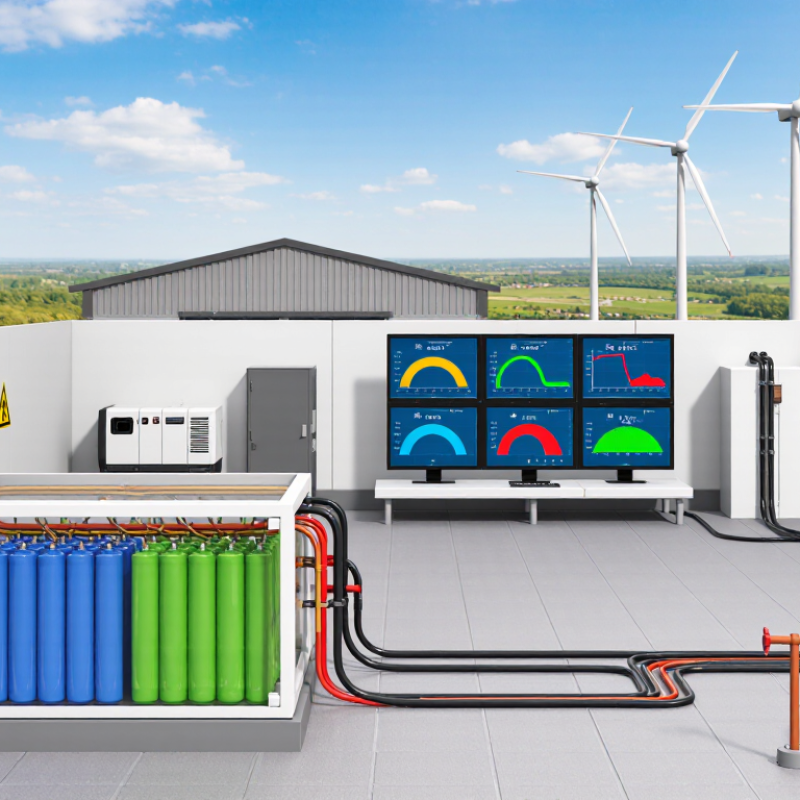
How to Plan Energy Storage for Microgrids?

Define Microgrid Goals, Loads, and Required Resilience

A microgrid storage plan should begin with clear goals, not a battery size. Is the system meant to reduce peak demand, support remote operation, or keep essential services running during outages? Those goals lead to different designs. List each load, its operating hours, and whether it can be shed. A clinic refrigerator, water pump, and office lighting have different priorities. Use interval-meter data where available, then check it against equipment schedules and site observations.

For resilience, define the outage you need to withstand: a few hours, overnight, or several days. Name the critical circuits and estimate their demand during that period. Then compare storage power, usable energy, recharge opportunities, and expected solar or generator output. A system can have enough energy on paper but still fail if its inverter cannot start a large motor. Include seasonal conditions and maintenance access. Be candid about uncertainty. Our first load estimate is often imperfect; site changes and human habits can shift demand. Revisit assumptions with operators before fixing the design.

Tips: Walk the site during a normal workday and ask staff what must stay on. Test a simple outage scenario on paper. Record assumptions beside every estimate, including missing data. Small details matter.

Assess Renewable Resources and Existing Grid Conditions

Start with the site. Assess solar, wind, or other renewable resources using local measurements and seasonal records, not just annual averages. A rooftop may receive strong midday sun but lose output to nearby trees, dust, or winter shade. Wind readings can also vary sharply across a site. Measure before sizing.

Hourly data helps reveal when generation is available and when demand rises. Compare it with load records for ordinary days, weekends, and seasonal peaks. If detailed records are missing, temporary meters can expose patterns that utility bills hide. This work is imperfect; a short survey may miss unusual weather or operating shifts. Note those gaps rather than treating estimates as facts.

Check the existing grid connection, too. Review feeder capacity, voltage quality, outage history, and any export limits with qualified local engineers and the utility. A microgrid facing frequent interruptions needs a different storage strategy from one mainly shifting midday surplus into evening use. Identify critical loads, such as refrigeration or pumps, and estimate how long they must run during an outage. Then test scenarios: several cloudy days, a late-evening peak, or reduced renewable output. Keep assumptions visible. Real sites are messier than spreadsheets.

Determine Storage Capacity and Power Requirements

How to Plan Energy Storage for Microgrids?
Determine Storage Capacity and Power Requirements

Size power and energy separately. Power, measured in kilowatts, must cover the highest simultaneous demand, including brief motor-starting surges. Capacity, measured in kilowatt-hours, depends on how long essential loads must run. Build an hourly load profile from meter data, then identify what stays online during an outage: refrigeration, pumps, communications, or medical equipment. A peak-demand number alone can hide a long overnight load.

For example, critical loads averaging 80 kW for six hours require 480 kWh delivered before allowances for reserve, conversion losses, and battery aging. The U.S. Department of Energy’s 2022 Grid Energy Storage Technology Cost and Performance Assessment uses an 85% round-trip efficiency assumption for lithium-ion systems. This is a useful planning reference, not a site guarantee. Round-trip efficiency describes charging and discharging together; it should not be applied blindly to the discharge calculation. This estimate is not the design. Check actual equipment data and model seasonal loads.

Tips: Test the design against cloudy weather, a delayed generator start, and the largest motor startup. Set a minimum state of charge for emergencies. Revisit assumptions after collecting real operating data; even good load estimates can be wrong.

How to Plan Energy Storage for Microgrids: Determine Storage Capacity and Power Requirements

Illustrative evening net-deficit profile. Positive values show the battery power needed to serve demand after renewable generation.

Planning estimate: The peak deficit is 1.5 MW, so the battery should provide at least 1.5 MW of discharge power. The six-hour profile requires 6.5 MWh of delivered energy. Assuming 90% usable battery capacity and a 10% design margin, plan for approximately 8 MWh of rated storage capacity and 1.7 MW of power. These illustrative values should be replaced with site-specific load, renewable-generation, and outage data.

Select Storage Technologies and Control Strategies

Microgrid storage planning starts with the load, not a battery catalogue. Duration matters. Map critical loads by the minute and hour, then measure peak demand, outage targets, renewable swings, and available fuel. Lithium-ion batteries suit fast response and frequent cycling; flow batteries or thermal storage may fit longer, repeated duties. Chemistry alone is not a plan. The IEA’s 2024 Batteries and Secure Energy Transitions report says global power-sector battery capacity must grow from about 42 GW in 2023 to 1,200 GW by 2030. That global figure signals scale, not a microgrid sizing rule. Use project-specific modeling and life-cycle cost comparisons. NREL’s 2024 Annual Technology Baseline provides cost and performance assumptions, but local replacement costs still need checking. That gap matters.

Control strategy determines whether stored energy is useful during a real outage. Set an energy-management system to forecast solar output and demand, protect a state-of-charge reserve, and dispatch storage around peak loads. A clinic might reserve power for refrigeration and lighting before running a flexible water pump. Configure inverters for grid-forming operation if the microgrid must stabilize its own voltage and frequency. Test islanding, reconnection, and black-start sequences under realistic loads. Forecasts will be wrong sometimes. A controller that looks efficient in a spreadsheet can drain reserves before a cloudy evening; review actual operating data and adjust its thresholds.

How to Plan Energy Storage for Microgrids? — Select Storage Technologies and Control Strategies

Technology screening guide for preliminary microgrid planning
Storage technology Typical discharge duration Indicative round-trip efficiency Best suited to Key planning considerations Useful control approach
Lithium-ion battery About 0.5–4 hours for many behind-the-meter and microgrid applications; longer configurations are possible. About 85–95% Fast frequency response, renewable-energy shifting, peak reduction, and short-duration backup. Account for temperature, degradation, fire protection, usable state-of-charge limits, and replacement or augmentation over the project life. Use a battery management system with an energy-management system (EMS). Set state-of-charge reserves and coordinate dispatch with renewable forecasts and critical-load requirements.
Flow battery Often about 4–12 hours, depending on tank sizing. About 65–85% Longer-duration daily shifting and repeated cycling where energy capacity needs to be expanded separately from power capacity. Consider pumps and auxiliary loads, electrolyte and system maintenance, installation footprint, and project economics at the intended cycling rate. Schedule charge and discharge against forecast renewable generation and load; maintain operating limits for electrolyte, pumps, and state of charge.
Lead-acid battery Commonly designed for several hours; usable duration depends strongly on discharge rate and depth of discharge. About 70–85% Cost-sensitive backup and relatively modest cycling needs. Plan for ventilation, temperature management, limited cycle life under deep or frequent cycling, and appropriate end-of-life handling. Prioritize backup reserve, limit deep discharge, and use charging controls suited to the battery type and manufacturer limits.
Flywheel Seconds to minutes; some systems can provide longer short-duration support. About 85–95% High-power, rapid-response services such as frequency support and bridging short disturbances. Evaluate standby losses, site requirements, power rating, and whether another resource is needed for sustained energy supply. Use fast local power control for frequency response, coordinated with batteries or generators for longer events.
Supercapacitor Seconds to minutes. About 90–98% Very rapid power bursts, voltage support, and smoothing short-term fluctuations. High power capability is paired with comparatively low energy capacity; it is generally not a stand-alone solution for extended backup. Apply fast voltage or power control, with a slower storage resource handling sustained energy balancing.
Pumped-storage hydropower Typically several hours; project-specific reservoirs can support longer discharge. About 70–85% Large sites with suitable elevation, water resources, and long-term operating needs. Requires suitable geography, civil works, permitting, and substantial project development; usually impractical for small sites. Use supervisory dispatch for pumping and generation, with reserves set aside for contingencies and islanded operation.
Power-to-hydrogen with reconversion Hours to days or longer, subject to storage capacity and reconversion equipment. Often about 25–45% electricity-to-electricity round trip Long-duration or seasonal energy storage where other options cannot economically cover extended shortages. Include electrolyzer and generator or fuel-cell costs, conversion losses, hydrogen storage and safety requirements, and minimum operating constraints. Operate primarily on longer forecast horizons; preserve hydrogen inventory for extended renewable shortfalls or resilience events.
Control and sizing decisions to include in the microgrid plan
Planning decision Recommended approach What to verify
Define the service objective Specify whether storage is intended for outage resilience, renewable shifting, peak reduction, power quality, or a combination. Identify critical loads, required islanding duration, load-shedding priorities, and acceptable interruption levels.
Size power and energy separately Size power in kW or MW for peak demand and response needs; size energy in kWh or MWh for the required duration. Test seasonal load profiles, renewable variability, conversion losses, reserve limits, and the longest credible islanded period.
Choose grid-following or grid-forming capability Use grid-forming capability when the microgrid must establish voltage and frequency while islanded. Grid-following resources operate against an existing voltage reference. Confirm inverter capability, protection coordination, black-start sequence, grounding, and compatibility with generators and other inverters.
Coordinate control by time scale Use fast local controls for voltage and frequency response, supervisory controls for restoration and dispatch, and an EMS for forecasts and economic scheduling. Check communications failure behavior, control priorities, response times, and transitions between grid-connected and islanded modes.
Set operating reserves Reserve enough usable energy and power for contingencies, critical loads, and forecast uncertainty rather than dispatching the battery solely for daily savings. Model state-of-charge limits, generator start time, renewable forecast error, load growth, and black-start needs.
Compare lifecycle performance Evaluate capital and replacement costs, efficiency, degradation, maintenance, and expected cycling across the planned project life. Use site-specific load and weather data, vendor-neutral assumptions, and sensitivity cases for fuel prices, outages, and equipment availability.

Note: Efficiency and duration figures are indicative screening ranges, not guaranteed product specifications. Actual performance depends on system design, operating conditions, auxiliary loads, and the point at which efficiency is measured.

Evaluate Costs, Safety, and Regulatory Requirements

Plan storage around the microgrid’s actual duty: short peak shaving, overnight backup, or several hours of islanded operation. Each use case changes battery capacity, inverter sizing, and replacement timing. Compare lifetime cost, not just purchase price. Include installation, controls, grid connection, maintenance, degradation, and eventual disposal. A low-cost system can become expensive if it cycles harder than expected. Small details matter.

Safety planning should shape the layout before equipment is selected. Check fire-service access, separation distances, ventilation, temperature monitoring, and emergency shutdown procedures. For example, a narrow service lane may look efficient on a site drawing but obstruct responders carrying equipment. Confirm that alarms reach a staffed contact, including after hours. These measures add cost, but skipping them creates risks that a spreadsheet may not show.

Regulatory requirements vary by location and utility. Confirm electrical, building, fire, environmental, and interconnection approvals with the relevant authorities early. Ask whether the project needs site studies, inspections, operating permits, or an emergency response plan. Keep written records of design assumptions and approval conditions. That changes the math. One assumption often survives too long: expected operating hours. Revisit it against measured load data, and leave room for revision when forecasts prove imperfect.

FAQS

What should guide a microgrid storage plan?

Start with the goal, not battery size. Decide whether storage will reduce peak demand, support remote operation, or keep essential services running.

How can a site identify its critical loads?

List each device, operating hours, and whether it can be switched off. A clinic refrigerator, water pump, and office lights may have different priorities.

What information helps estimate energy demand?

Use interval-meter data when available. Check it against equipment schedules and a walk-through during a normal workday. Small details matter.

How long should storage support an outage?

Define a practical target, such as a few hours, overnight, or several days. Estimate critical-circuit demand across that period.

Why must storage power and usable energy be checked separately?

Energy determines how long loads can run. Power determines whether the system can serve them at once or start a large motor.

How should a project choose a storage technology?

Match the technology to duty and duration. Fast response and frequent cycling differ from longer, repeated storage needs. Compare local costs and replacement needs.

What should an energy-management system do during an outage?

Forecast demand and solar output, protect a reserve, and prioritize critical circuits. A clinic might save power for refrigeration before running a flexible pump.

How can operators check whether controls will work in practice?

Test islanding, reconnection, and black-start sequences under realistic loads. Review operating data afterward; forecasts can miss a cloudy evening.

How should planners handle uncertain estimates?

Record assumptions beside each estimate, including missing data. Ask operators to review them before fixing the design. Habits change, and early estimates can be wrong.

Conclusion

How to plan energy storage for microgrids begins with a clear understanding of what the system must accomplish. Define the microgrid’s goals, identify critical and everyday loads, and decide how long essential services should remain available during an outage. Then assess local renewable resources, existing grid conditions, and expected changes in energy use. These factors help determine when surplus energy may be available and how much backup support the microgrid needs.

Next, size storage by considering both capacity, which determines how much energy it can hold, and power, which determines how much it can deliver at a given time. Compare suitable storage technologies and choose control strategies that coordinate storage, generation, loads, and grid connections. Finally, evaluate lifecycle costs, operational safety, maintenance needs, and applicable permitting and interconnection requirements. A well-planned system balances reliability, performance, and affordability while remaining adaptable as community needs and energy resources change.

Sienna

Sienna

Sienna is a skilled marketing professional with a deep expertise in our company’s core products and services. With a passion for innovation and detail, she plays a pivotal role in crafting insightful blog posts that not only highlight the unique features of our offerings but also provide valuable......