5 Tips on How Lithium Ion and Flow Batteries Differ

Time:2026-10-14 Author:Isabella
0%

Choosing an energy storage system is rarely as simple as comparing capacity and price. Engineers must examine discharge duration, operating temperature, safety controls, maintenance, and site conditions. This guide explains How lithium-ion and flow batteries differ through five practical tips. It focuses on how each technology behaves beyond a laboratory specification sheet.

Lithium-ion batteries store energy inside solid electrode materials and usually deliver high power from a compact footprint. They suit electric vehicles, backup systems, and short-duration grid applications. Flow batteries store energy in liquid electrolytes held in external tanks. Their capacity can often increase by enlarging the tanks, while power depends more directly on the reactor stack. That distinction matters.

Look closer.

A project may need fast response, long discharge periods, or frequent cycling. Lithium-ion systems can offer strong efficiency, but thermal management and degradation require serious planning. Flow batteries may provide longer operating durations and reduced fire-propagation concerns, yet pumps, tanks, and larger spaces add complexity. Neither option wins in every situation.

Real projects expose uncomfortable exceptions. Published efficiency figures may not match performance at extreme temperatures, partial loads, or aging conditions. Costs also change with financing, installation, replacement schedules, and local supply chains. This article uses established battery principles and practical decision factors rather than treating one technology as universally superior. Readers should still verify manufacturer data, independent testing, and site-specific engineering requirements before making a final choice.
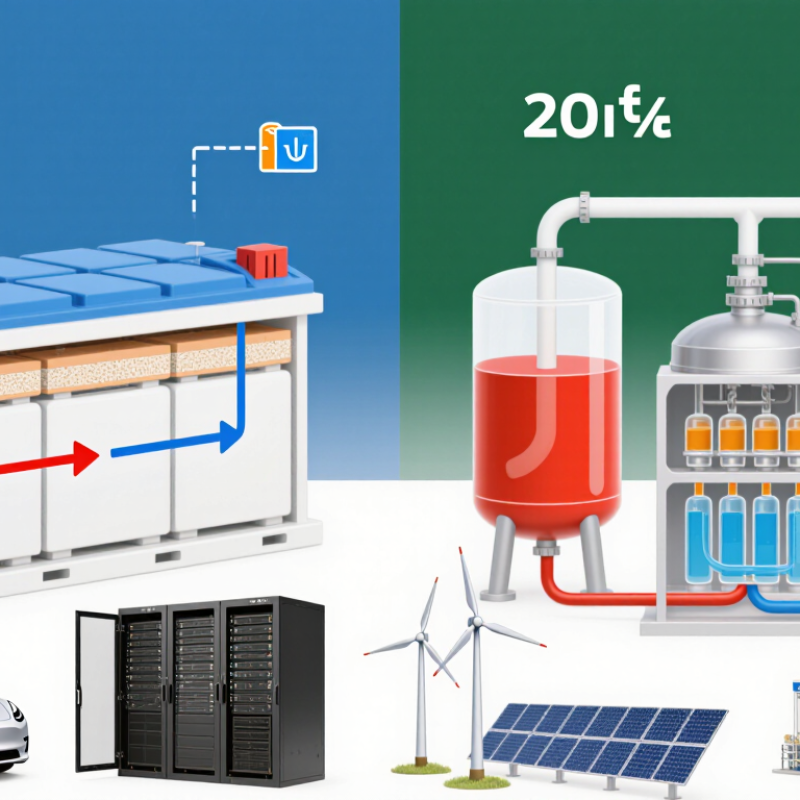
5 Tips on How Lithium Ion and Flow Batteries Differ

Battery Chemistry and Energy Storage Mechanisms

5 Tips on How Lithium Ion and Flow Batteries Differ

Battery Chemistry and Energy Storage Mechanisms

Tip 1: Look at where energy is stored.

Lithium-ion batteries store energy inside solid electrodes through the movement of lithium ions. During charging, ions travel through an electrolyte and settle into the negative electrode. During discharge, they return and create an electrical current. The process is compact and responsive, but repeated cycling can gradually change the electrode structure.

Tip 2: Flow batteries store energy in liquid electrolytes held in external tanks.

Pumps move these liquids through an electrochemical cell during charging and discharging. Their energy capacity can increase by enlarging the tanks, while power depends more on the cell stack. That separation is useful for long-duration storage. It also introduces pumps, pipes, and maintenance points.

Tip 3: Compare chemistry with the intended duty cycle.

Lithium-ion systems often deliver high power in a smaller space and respond quickly. Flow systems may suit applications requiring many hours of steady output. Neither chemistry wins every test. Temperature, electrolyte condition, operating controls, and installation design can change real performance.

A practical detail matters: lithium-ion capacity may fade with heat and deep cycling. Flow batteries can maintain stable cycling, yet their efficiency may be lower because pumps consume energy. The distinction is not always neat. Field measurements, not brochures, should guide a storage decision.

Energy Density, Duration, and Performance Differences

5 Tips on How Lithium Ion and Flow Batteries Differ

Energy density is the clearest dividing line. Lithium-ion systems store more energy in a smaller cabinet. That matters where land is limited. Flow batteries usually need more space because energy remains in external electrolyte tanks. More room, less compactness.

Duration changes the design conversation. Lithium-ion units often suit short, high-power applications lasting one to four hours. Flow batteries can support longer discharge periods with less stress on the core cell materials. Their energy capacity can expand by increasing tank volume. A useful detail: power depends on the cell stack, while duration depends mainly on electrolyte volume.

Performance includes more than speed. Lithium-ion batteries respond quickly and can achieve strong round-trip efficiency. Flow batteries also respond rapidly, but pumps and auxiliary equipment consume energy. Their longer cycle potential may support frequent daily operation. Temperature control affects both technologies. Lithium-ion systems require careful thermal management. Flow systems need reliable pumps, pipes, and sensors. Small maintenance failures can reduce availability. That detail is easy to overlook.

Cost comparisons need patience. A compact lithium-ion installation may reduce construction complexity. A flow system may become more attractive as duration extends. Actual results depend on chemistry, climate, operating profile, and replacement planning. In project reviews, the cheapest container is rarely the cheapest lifetime solution. This is where simple comparisons fail. Consider energy density, discharge duration, efficiency, degradation, safety design, and service access together.

Charging, Discharging, and Operational Requirements

5 Tips on How Lithium Ion and Flow Batteries Differ

Charging, Discharging, and Operational Requirements

Lithium-ion batteries accept high-power charging within narrow voltage and temperature limits. Flow batteries charge by moving electrolyte through electrochemical stacks. Pumps and valves become part of the energy path. That difference affects efficiency and operating cost. A battery management system monitors individual lithium-ion cells. A flow controller tracks pressure, temperature, and electrolyte balance.

Charging speed is another practical distinction. Lithium-ion systems often respond quickly, making them useful for short, frequent power changes. Flow batteries may need longer charging periods, especially when pump capacity limits circulation. During discharge, lithium-ion output can remain stable until the system approaches a low state of charge. Flow batteries can continue supplying power while electrolyte keeps circulating. However, their pumps consume energy during operation. Small losses matter over many hours.

Temperature control deserves careful attention. Excessive heat can accelerate lithium-ion aging, while very low temperatures reduce charging performance. Flow batteries also need thermal management, although their liquid volume can simplify heat distribution. Both systems require ventilation, monitoring, and tested protection settings. Commissioning teams should verify sensors under real load, not only in a workshop. A careless assumption can produce misleading efficiency figures. The comparison is not perfectly neat. Site conditions, cycling depth, response time, and maintenance access can change the better choice. Expect trade-offs.

Safety, Lifespan, and Maintenance Considerations

Lithium-ion and flow batteries differ most in safety, lifespan, and maintenance. Check safety first. Lithium-ion cells can experience thermal runaway when damaged, overheated, or poorly controlled. Flow systems usually use aqueous electrolytes, reducing fire risk, but pumps and piping still require protection. Flow is not maintenance-free. According to the U.S. Department of Energy’s 2022 Grid Energy Storage Technology Cost and Performance Assessment, reported fire risk, efficiency, and installation requirements vary widely by design. NFPA 855 also emphasizes spacing, detection, ventilation, and emergency planning for stationary storage.

Check lifespan before comparing purchase prices. The same DOE assessment reports approximately 3,000–10,000 cycles for many lithium-ion systems, compared with about 10,000–20,000 cycles for flow technologies. Actual results depend on temperature, depth of discharge, and operating schedules. Flow batteries can replace pumps, seals, or sensors over time, while lithium-ion systems may need module replacement as capacity fades. That difference changes long-term labor. It is easy to oversimplify here.

A third check is maintenance access. Lithium-ion systems need thermal monitoring, software controls, and inspection after abnormal events. Flow systems need electrolyte balancing, leak checks, and pump servicing. Fourth, match the battery to the duty cycle: lithium-ion often suits short, frequent dispatch, while flow can support longer discharge periods. Finally, compare usable lifetime energy, not just efficiency. The International Energy Agency’s 2024 Batteries and Secure Energy Transitions report notes that safety, supply resilience, and recycling increasingly influence storage decisions. The cheapest first-year option may be the wrong answer.

5 Tips on How Lithium Ion and Flow Batteries Differ - Safety, Lifespan, and Maintenance Considerations

Tip Comparison Dimension Lithium-Ion Batteries Flow Batteries Practical Consideration
1 Safety and Thermal Risk High energy density in a compact enclosure. Internal faults, overcharging, physical damage, or excessive heat can cause thermal runaway if the system is poorly designed or managed. Energy is stored in liquid electrolytes held in external tanks. The chemistry generally has a lower risk of cell-to-cell thermal propagation, although pumps, piping, tanks, and electrolyte handling still require safeguards. Lithium-ion systems need battery-management systems, temperature monitoring, ventilation, protective controls, and suitable fire-safety planning. Flow systems need leak detection, spill control, and pump protection.
2 Expected Service Life Common stationary systems are often designed for approximately 10–15 years, depending on chemistry, operating temperature, depth of discharge, charge rate, and cycling profile. Capacity gradually declines over time. The power stack and balance-of-plant components can require servicing, but the electrolyte can often be cycled repeatedly with comparatively low capacity loss. System life may extend beyond 15–20 years when properly maintained. Compare total lifetime energy delivered rather than purchase price alone. Frequent deep cycling may favor flow technology, while shorter-duration or space-constrained projects may favor lithium-ion.
3 Energy and Power Scalability Power and energy are closely linked by the number and size of cells. Increasing storage duration commonly requires adding more battery modules, which can increase enclosure space and capital cost. Power is primarily determined by the electrochemical stack, while energy is increased by enlarging the electrolyte tanks or adding more electrolyte. This allows flexible duration scaling. Select lithium-ion for compact, high-power applications or shorter discharge durations. Consider flow batteries where long-duration storage and independent power-to-energy sizing are priorities.
4 Maintenance Requirements Maintenance is usually focused on monitoring state of charge, temperature, alarms, cooling equipment, electrical connections, and battery-management data. Modules may eventually need replacement as capacity falls. Regular inspection may include pumps, valves, filters, sensors, piping, electrolyte levels, and corrosion or leak control. Auxiliary equipment can require more routine attention than sealed battery modules. Lithium-ion generally has simpler routine mechanical maintenance. Flow systems can be more service-intensive, but many components can be repaired or replaced without replacing all stored electrolyte.
5 Efficiency, Footprint, and Best Use Typically offers high round-trip efficiency, often around 85–95% at the system level, plus high energy density and fast response. It is well suited to frequency regulation, backup power, and short-duration peak shifting. Often has lower round-trip efficiency than lithium-ion, commonly about 60–85% depending on chemistry and system design. It generally requires more physical space but is well suited to repeated, long-duration cycling. Evaluate available land, local climate, cycling frequency, required discharge duration, efficiency targets, permitting, and the cost of replacement or servicing over the full project life.

Note: Actual performance, safety characteristics, service life, and efficiency vary with battery chemistry, system architecture, operating conditions, installation quality, and maintenance practices.

Best Applications for Lithium-Ion and Flow Batteries

Choosing between lithium-ion and flow batteries depends on the job, not just the rated capacity. Lithium-ion systems suit homes, electric transport, and commercial sites needing fast response. They can absorb rooftop solar during the day and release energy during evening demand. Their compact cabinets also help where floor space is limited. Think in hours, not labels.

Flow batteries often fit longer-duration storage at utility sites, factories, and renewable-energy projects. Their liquid electrolyte is stored in external tanks, allowing energy capacity to increase with tank size. This design can support repeated daily cycling with less concern about capacity fading. Large tanks need more land, pumps, and careful maintenance, however.

Space changes the decision.

For backup power, lithium-ion can provide rapid transfer for clinics, data rooms, and small businesses. Flow systems may be more practical for several hours of grid support or remote microgrids. Safety planning must include ventilation, temperature control, fire protection, and electrolyte handling. I have seen project teams compare only purchase prices, which is a weak habit. Installation, replacement, efficiency, and service access can reshape the total cost. A lithium-ion system may win in a dense urban building, while a flow battery may perform better beside a solar field. That assumption can still fail when local climate, operating schedules, or maintenance skills differ. Test the duty cycle with measured site data.

FAQS

Where does each battery type store energy?

Lithium-ion batteries store energy inside solid electrodes. Lithium ions move through an electrolyte during charging and discharging. Flow batteries store energy in liquid electrolytes held in external tanks. Pumps move the liquids through an electrochemical cell.

Which battery type usually responds faster?

Lithium-ion systems generally deliver high power quickly. They can fit substantial capacity into a smaller space. Flow batteries may respond effectively, but pumps and liquid movement add extra equipment. Speed is not their only purpose.

Which battery suits long-duration storage?

Flow batteries may suit applications needing several hours of steady output. Larger tanks can increase energy capacity. Lithium-ion batteries often suit shorter, frequent dispatch. The best choice still depends on operating conditions.

How do temperature and cycling affect performance?

Heat and deep cycling can reduce lithium-ion capacity over time. Electrode structures may gradually change. Flow batteries can cycle steadily, but pump energy use may lower efficiency. Real results can vary noticeably.

Are flow batteries completely maintenance-free?

No. Pumps, seals, sensors, pipes, and electrolyte levels need regular checks. Small leaks can become expensive problems. Lithium-ion systems need thermal monitoring, software controls, and inspections after unusual events.

Which battery type may have a longer cycle life?

Many lithium-ion systems provide roughly 3,000–10,000 cycles. Flow technologies may reach about 10,000–20,000 cycles. Actual lifespan depends on temperature, discharge depth, and operating schedules. These figures are useful, but not promises.

What safety issues should operators consider?

Damaged or overheated lithium-ion cells can experience thermal runaway. Monitoring and careful installation are essential. Aqueous flow electrolytes usually reduce fire risk, but pumps and piping still need protection. Flow is safer, not risk-free.

How should buyers compare total value?

Compare usable lifetime energy, maintenance labor, safety equipment, and replacement needs. Do not judge only by first-year price. A lithium-ion system may need module replacement as capacity fades. A flow system may need new pumps or seals. Simple comparisons can mislead. Field measurements deserve more trust than brochures.

Conclusion

Understanding how lithium-ion and flow batteries differ begins with their chemistry and energy storage mechanisms. Lithium-ion batteries store energy within solid electrode materials, allowing high energy density, compact designs, and fast response times. Flow batteries store energy in liquid electrolytes held in external tanks, making their capacity easier to expand by increasing tank size. These differences affect duration, efficiency, charging speed, and operational requirements. Lithium-ion systems are generally suited to applications needing rapid power delivery and limited-duration storage, while flow batteries can provide longer discharge periods with flexible capacity management.

Safety, lifespan, and maintenance are also important considerations. Lithium-ion batteries may require careful thermal control and monitoring, whereas flow batteries typically operate with lower fire risk but include pumps, tanks, and other balance-of-system components that need servicing. Choosing between them depends on project goals, including space, response time, storage duration, cycling frequency, maintenance preferences, and total cost. By examining how lithium-ion and flow batteries differ, users can select the technology that best matches residential, commercial, industrial, or grid-scale energy storage needs.

Isabella

Isabella

Isabella is a dedicated marketing professional with a sharp focus on driving brand growth and engagement through strategic content creation. With an extensive background in digital marketing, she combines her passion for storytelling with her keen understanding of industry trends to deliver......