The demand for efficient energy storage solutions is soaring. According to a report by the International Energy Agency, global energy storage capacity could reach 2,000 GWh by 2040, enhancing grid stability and renewable energy integration. As more industries seek to adopt sustainable practices, the challenge remains: How to upgrade existing energy storage systems effectively.
Organizations often struggle with outdated technology, leading to inefficiencies. Upgrading these systems can significantly improve performance, reduce operating costs, and extend lifespan. Advanced methods such as integrating AI and optimizing battery management systems are gaining traction. However, not every upgrade is straightforward. Many companies face hurdles in balancing cost against performance gains, prompting the need for careful consideration and analysis.
Understanding how to upgrade existing energy storage systems is crucial for staying competitive. New technologies, while promising, also present challenges. They require significant investment and a thoughtful implementation strategy. The potential benefits, however, can reshape the energy landscape. Crafting a tailored approach to upgrades can lead to remarkable advancements in efficiency and reliability.
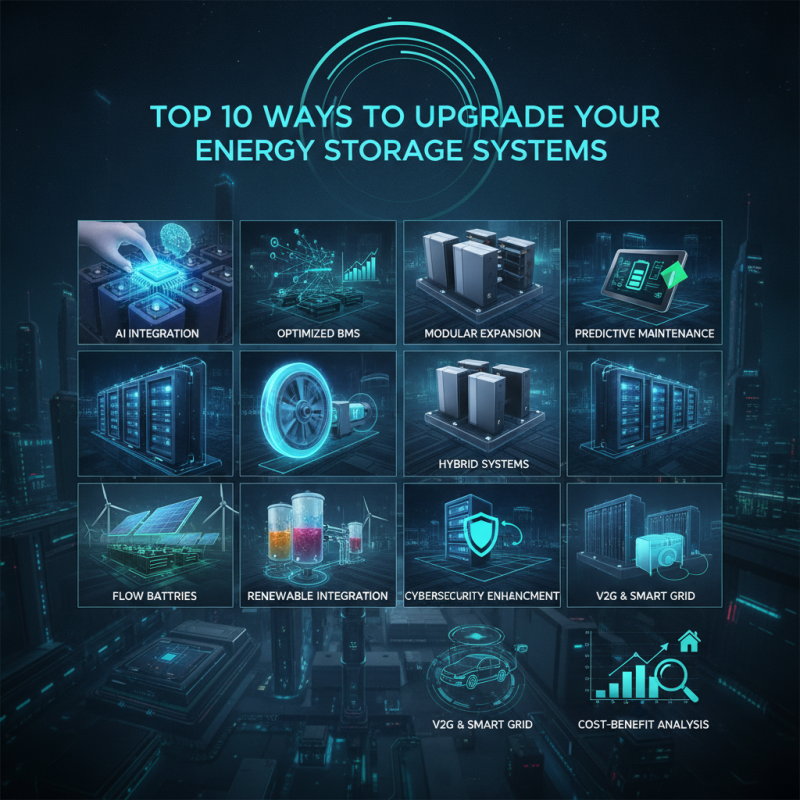
Energy storage systems are crucial in today's power landscape. They allow us to store energy and manage supply and demand effectively. These systems help balance intermittent renewable energy sources like solar and wind. By understanding their basic components, we can better appreciate their value.
At the core of energy storage are batteries, capacitors, and pumped hydro systems. Each type has unique characteristics and applications. For example, lithium-ion batteries offer high energy density, while pumped hydro provides large-scale storage. The choices we make today can impact future energy efficiency.
However, not all energy storage systems are created equal. Many face challenges such as degradation over time and limited lifespan. Continuous improvement is essential. As we upgrade these systems, we must consider their environmental impact and technological feasibility. An ongoing dialogue about these factors is vital for sustainable growth in energy storage.
Evaluating current energy storage technologies reveals a diverse landscape of solutions. Lithium-ion batteries dominate the market due to their efficiency and cost-effectiveness. They provide a reliable option for many applications. However, their environmental impact raises concerns. Mining for lithium can be detrimental, leading to resource depletion.
Alternative technologies are gaining traction. Flow batteries, for example, offer longer cycle life and quicker recharging. They store energy in liquid electrolytes, which can be a more sustainable option. Yet, initial costs and complexity can deter investment.
Supercapacitors are another contender in this field, with rapid discharge and recharge capabilities. Their longevity makes them attractive, but energy density remains a hurdle. Evaluating these options requires balancing efficiency, sustainability, and cost. Each technology has strengths and weaknesses, and ongoing innovation is crucial for overcoming these challenges.
When upgrading energy storage systems, identifying key performance metrics is crucial. These metrics help measure efficiency, durability, and reliability. Start by evaluating round-trip efficiency, which indicates the energy that can be retrieved from storage compared to what was initially put in. A system with a higher efficiency means less energy loss. Each percentage point increase can significantly impact operational costs over time.
Another vital metric is cycle life. A longer cycle life translates to fewer replacements and lower maintenance costs. It’s essential to analyze how system performance changes over repeated charging and discharging cycles. Yet, it's important to acknowledge that some systems may underperform in specific environments. Factors such as temperature variations can affect durability.
Depth of discharge (DoD) is also worth considering. It refers to how much energy is extracted from a system during each cycle. A shallower DoD often extends battery life. However, this approach can limit energy availability. Finding the right balance between usage and longevity often requires testing and adaptation. Keeping these metrics in mind ensures a more informed decision-making process.
The quest for innovative materials in energy storage systems is more crucial than ever. Many researchers explore new substances that can increase storage capacity significantly. For instance, lithium-sulfur batteries have gained attention due to their high theoretical energy density. However, their commercial viability is still a challenge, mainly due to cycle stability issues. How do we overcome these hurdles?
Another promising direction is using nanostructured materials. These materials can boost the performance of existing technologies. With their high surface area, they allow for better ion diffusion. Graphene and carbon nanotubes are leading the way, yet they come with high production costs. It raises the question: are we sacrificing affordability for innovation?
Finally, organic materials present an exciting alternative. They are abundant, less toxic, and can be engineered for better performance. However, the transition from lab to real-world application is not straightforward. Many designs still need optimization for efficiency and longevity. Thus, we find ourselves at the crossroads of potential and practicality in energy storage advancement.
Implementing smart technologies in energy management systems is essential for optimizing energy storage. According to a report by BloombergNEF, energy storage capacity is expected to reach 1,095 GWh by 2040. Smart technologies help manage this capacity efficiently.
Data analytics enhances performance monitoring. Through real-time analysis, companies can identify inefficiencies. This allows for informed decisions on energy consumption. Power grid operators can also predict demand more accurately. This minimizes costs and reduces carbon footprints.
Tip: Invest in machine learning algorithms to process large data sets. They can provide insights that manual methods may miss.
Integration with renewable energy sources is vital. Forecasting tools can analyze weather patterns and adjust storage accordingly. This ensures stored energy meets demand when renewable sources are less available.
Tip: Explore IoT-enabled devices for seamless communication between systems. They facilitate data sharing across platforms, which improves overall management.
Even with advancements, challenges remain. Older systems may not easily integrate with new smart technologies. Upgrading infrastructure requires investment and careful planning. Assessing current capabilities helps in strategizing effective upgrades.
: Energy storage systems allow for the storage and management of energy supply and demand. They play a vital role in balancing renewable energy sources.
Core types include batteries, capacitors, and pumped hydro systems. Each type has distinct characteristics and applications to consider.
Efficiency indicates how much energy can be retrieved versus what was stored. Higher efficiency reduces energy loss and operational costs.
Factors like cycle life and temperature variations can significantly impact a system's durability and overall performance over time.
Depth of discharge measures the energy extracted during each cycle. A shallower DoD can extend battery life but limits energy availability.
Innovative materials can enhance storage capacity. Researchers are exploring lithium-sulfur batteries and nanostructured materials for improved performance.
Lithium-sulfur batteries show high theoretical energy density but struggle with cycle stability, affecting their commercial viability.
These materials can improve performance by increasing surface area for better ion diffusion. However, they often come with high production costs.
Organic materials are abundant and less toxic, offering potential advantages. Yet, transitioning from lab to real-world application remains a challenge.
Continuous improvement and an ongoing dialogue about efficiency, environmental impact, and technological feasibility are vital for progress.
Upgrading existing energy storage systems is crucial for enhancing efficiency and capacity in today's energy landscape. This article outlines key steps, starting with a fundamental understanding of energy storage systems and current technologies available in the market. By identifying critical performance metrics, users can assess the effectiveness of their existing systems and determine areas for improvement.
Innovative materials play a significant role in increasing storage capacity and longevity, while the incorporation of smart technologies can greatly enhance energy management practices. By exploring these advancements and implementing suitable upgrades, stakeholders can optimize their energy storage solutions, ensuring sustainability and reliability in power supply. How to upgrade existing energy storage systems effectively involves a comprehensive evaluation of both current capabilities and future-oriented technologies.
HK Charger