Explore our industry-certified voltage stabilization and high-capacity battery units designed for modern microgrids.
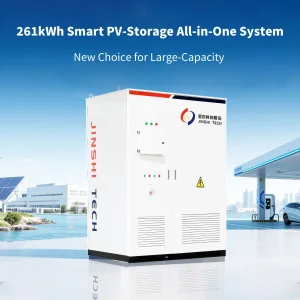
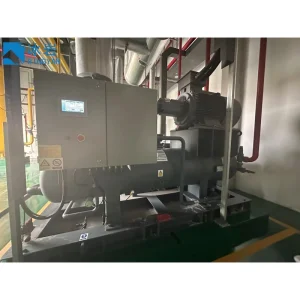
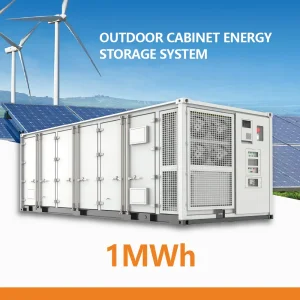
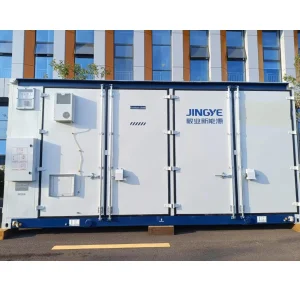
Hangzhou HK Charger Co., Ltd. is a leading manufacturer specializing in home, commercial, and industrial energy storage solutions, providing innovative systems for renewable integration, load balancing, and intelligent energy management. The company focuses on delivering reliable, efficient, and scalable energy storage products to meet the growing demand for clean, sustainable power.
HK Charger’s portfolio includes centralized and distributed storage systems, mobile and modular battery units, and hybrid solutions that seamlessly integrate with solar, wind, and other renewable energy sources. Each system is designed with smart monitoring, real-time performance tracking, and advanced load balancing capabilities, ensuring optimal energy efficiency, cost savings, and grid stability across various applications.
Committed to sustainability and technological innovation, Hangzhou HK Charger emphasizes intelligent energy management features, including remote monitoring, predictive maintenance, and scalable modular design. These solutions enable homeowners, businesses, and industrial operators to optimize energy usage, reduce peak demand charges, and maintain reliable power supply even in off-grid scenarios.
With strict adherence to international quality and safety standards, continuous R&D investment, and a customer-focused approach, Hangzhou HK Charger Co., Ltd. has established itself as a trusted China manufacturer in the energy storage industry. Our mission is to provide smart, efficient, and sustainable energy storage solutions that empower users to integrate renewable energy, enhance operational efficiency, and contribute to a greener future.
The global paradigm shift towards clean energy integration has introduced unprecedented challenges to modern power transmission and distribution grids. With the exponential rise of distributed energy resources (DERs) like solar photovoltaics and wind turbines, conventional grid infrastructures suffer from chronic power quality degradation. Voltage fluctuations, transients, sags, swells, and harmonic distortions are now common technical pain points.
Industrial commercial consumers, especially cleanroom semiconductor manufacturing plants, advanced automated factories, and high-density data centers, require a continuous, highly stabilized voltage source. Even a microsecond voltage sag below 10% can trigger automated safety shutdowns, resulting in millions of dollars in idle labor, ruined production batches, and equipment degradation.
Consequently, custom OEM voltage regulation solutions have transitioned from optional protection elements to mandatory infrastructural layers. Industry analysts project the global voltage stabilizer and active power quality control market to expand rapidly, fueled by EV fast-charging grid corridors and utility-scale BESS container integrations. Hangzhou HK Charger Co., Ltd. sits at the nexus of this growth, offering high-efficiency stabilizer control topologies embedded within centralized and distributed energy storage architectures.
Unlike off-the-shelf step-down transformers, custom OEM voltage regulation systems designed by Hangzhou HK Charger utilize state-of-the-art power electronics topologies. These architectures ensure that dynamic loads are stabilized in real-time under high-transient conditions.
Utilized to provide real-time reactive power compensation, correcting voltage fluctuations at the utility grid interface. These systems automatically inject or absorb reactive power within milliseconds to balance fluctuating loads.
Provides continuous, step-less regulation during major grid anomalies. It compensates for utility sags up to 50% and protects downstream critical equipment by reconstructing the optimal AC sine wave using IGBT inverter modules.
Specifically tailored for smart battery management systems (BMS) and hybrid inverters. Keeps DC bus voltages extremely stable during rapid battery charging or high-current discharge cycles, protecting sensitive silicon chips.
| Feature / Specification | HK Charger Standard OEM Specification | Industry Average Solution | Strategic Advantage |
|---|---|---|---|
| Response Speed | < 2 milliseconds | 20 - 50 milliseconds | Protects sensitive electronic equipment from transient trips |
| Efficiency Rating | Up to 98.5% at full load | 94% - 96% | Lower heat dissipation, reduces cooling costs significantly |
| Cooling Methods | Liquid Cooling & Intelligent Air Flow | Standard Passive Air Cooling | Extends battery pack life and maintains thermal stability |
| Harmonic Correction | Active harmonic filter (THDi < 3%) | No active filtering (THDi > 5%) | Reduces transformer loss and neutral wire heating |
Our comprehensive engineering portfolio covers every link in the power transmission and utilization chain. By combining dynamic voltage regulation technology with lithium-ion and LiFePO4 battery storage, Hangzhou HK Charger delivers complete turn-key solutions.
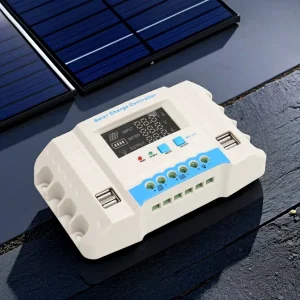
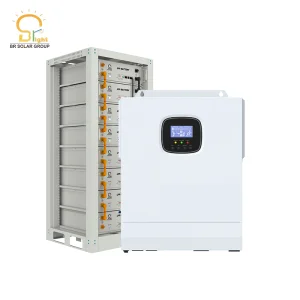
For manufacturing facilities integrating rooftop solar arrays, the intermittency of solar irradiance causes severe voltage fluctuations. The Smart Solar Energy Management System with LCD Monitor operates in tandem with bidirectional converters to absorb excess power during peak generation and inject real-time active power during cloudy periods. This continuous dampening effect stabilizes the local microgrid voltage without relying on utility grid compensation.
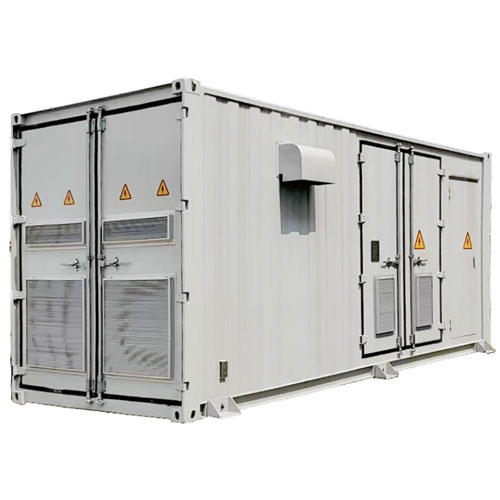
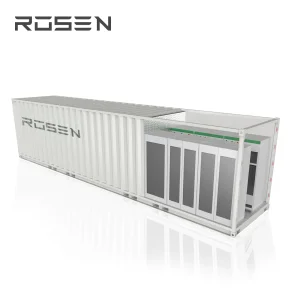
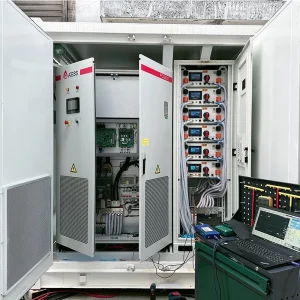
At the utility grid level, the 5mwh Grid-Tied Liquid-Cooled Containerized Energy Storage Unit represents the pinnacle of large-scale voltage and frequency stabilization. The liquid-cooled thermal management loop keeps battery cell temperatures within ±2°C, preventing thermal runaway and degradation. The onboard central controller manages active/reactive power flow and dynamic voltage regulation at the point of common coupling (PCC), meeting the strict grid-code requirements of global transmission operators.
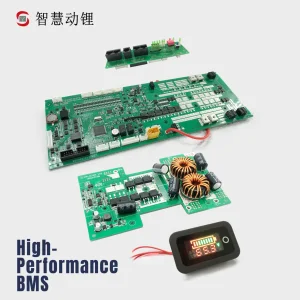
Voltage regulation starts at the cell level. Our Advanced 48V LiFePO4 Smart Battery Management System uses advanced microprocessor controllers to balance cell voltages during charge and discharge. By preventing over-voltage and under-voltage conditions in individual cells, it maximizes battery energy capacity and extends operating lifetimes past 6,000 cycles.
Different regions face unique grid challenges and compliance requirements. Hangzhou HK Charger works directly with local engineering firms to deliver custom OEM voltage regulation solutions tailormade for specific regional grid codes.
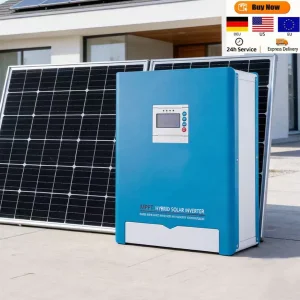
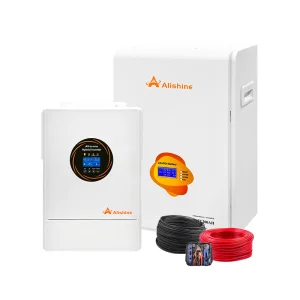
In the USA and Canada, the integration of distributed generation requires strict compliance with IEEE 1547. This standard dictates that inverters must ride through voltage sags and actively support voltage regulation. Our hybrid inverter systems and custom energy storage cabinets are engineered to meet UL 1741 SA/SB compliance, featuring advanced anti-islanding protection and grid-support functionality for peak-shaving applications.
European grid operators demand highly responsive primary frequency response and dynamic voltage support (reactive current injection during faults). We supply custom OEM cabinets equipped with smart BMS and multi-layered safety interfaces that align perfectly with EN 50549 codes. This enables seamless connection to local European low-voltage and medium-voltage distribution systems.
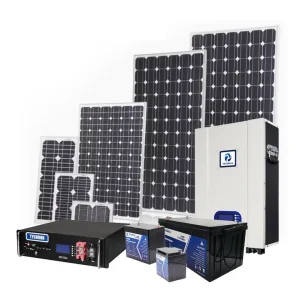
In regions where utility grids are weak or non-existent, off-grid systems must establish their own voltage reference. Utilizing our Complete off-Grid Solar Energy System for House and industrial split-design containerized storage, local mining operations, telecom towers, and remote communities can maintain a stable 230V/400V micro-grid environment, protected against lightning strikes, sudden load surges, and generator faults.
As energy grids continue to evolve, the technology powering voltage regulation and storage must also advance. The R&D division of Hangzhou HK Charger Co., Ltd. is continually pushing the boundaries of what is possible in power conversion efficiency and safety.
Replacing traditional Silicon IGBTs with Silicon Carbide (SiC) and Gallium Nitride (GaN) power transistors. This transition reduces switching losses by up to 50%, allows for higher switching frequencies, and significantly shrinks the physical footprint of OEM voltage regulation modules.
Integrating edge computing microcontrollers running machine learning algorithms within our BMS and EMS. This technology analyzes load patterns in real-time to predict voltage sags before they occur, dynamically adjusting the battery output profile to compensate.
Designing the next generation of battery management interfaces to accommodate high-voltage solid-state cells. This technology will offer double the energy density, zero risk of thermal runaway, and exceptionally fast charge-discharge response times for grid stability.
Deploy high-durability residential and containerized energy storage configurations with global safety certifications.
 HK Charger